Lord of the Flies (2026) Netflix Review
Series Review: Lord of the Flies
So, Netflix bought the distribution rights to a BBC production of the series adaptation of William Golding’s classic, *Lord of the Flies*. If you’ve read the novel, you know it’s a harrowing look at stupidity making the better argument when it comes to mob mentality. But does the show create something memorable, or should it be sequestered to its island to rot like the headless boar?
Innocence descends into savagery when a group of British schoolboys become desert island castaways, and social conventions disappear while attempts to rule responsibly fail. If you’re unfamiliar with the story, it’s basically a large group of young kids—all preteens, with some probably being closer to five-ish—who crash-land on an island, with all of the adults being killed. As they struggle to organize and coordinate, egos and machismo kick in, leading to a devastating series of events. It’s typically used as a cautionary tale of how humanity can devolve into barbarity when a moral code isn’t constraining actions.
A Beautiful But Savage Island
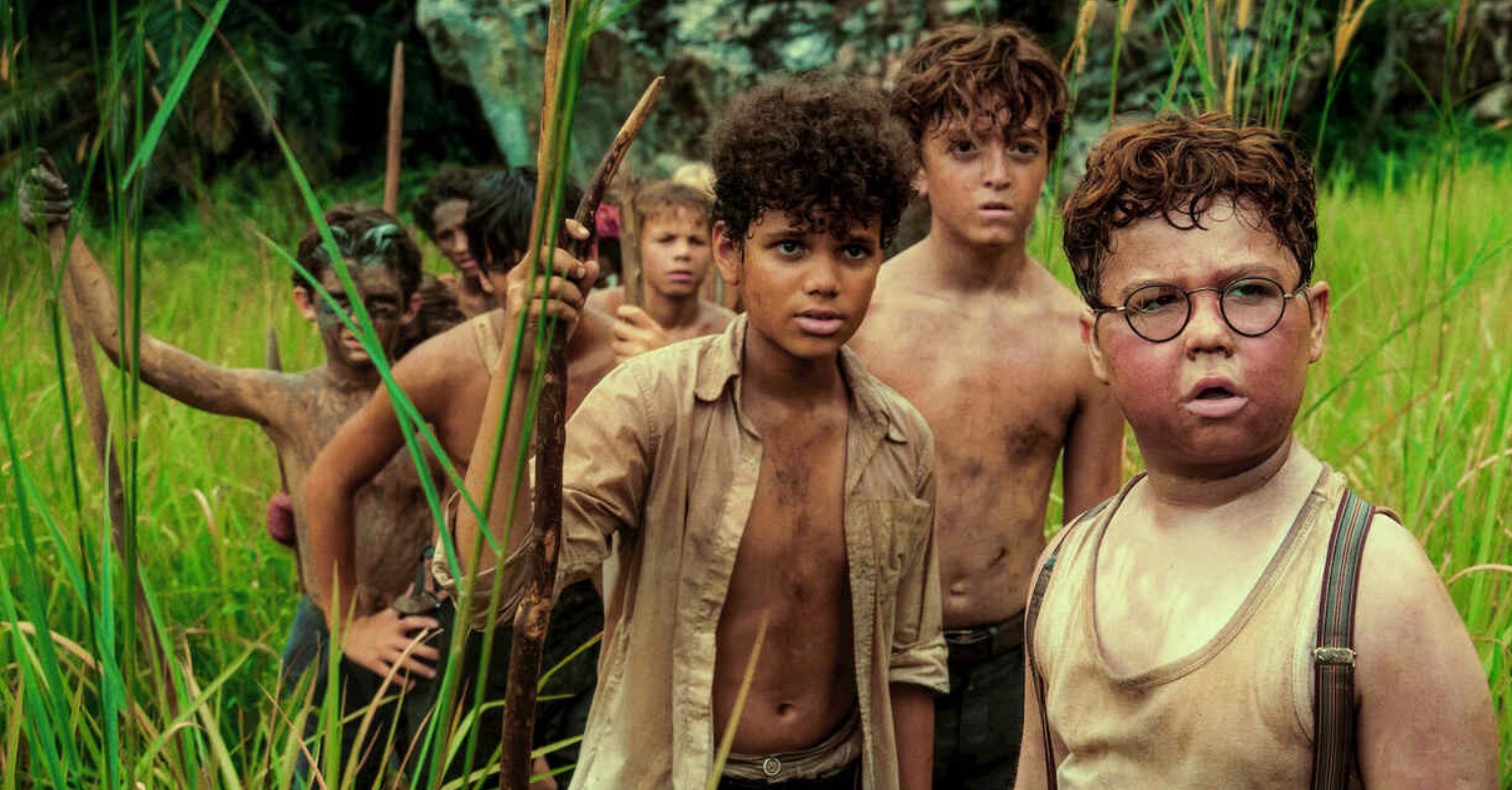
The production is absolutely stunning to view. From the opening scenes, we’re awakened in a jungle with the camera using this wide angle fisheye lens, creating a semi distorted view of the surroundings. The images towards the edge of the frame bend and wave, instantly creating this dream-like sense and the emotional confusion that the characters are experiencing. Throughout the four episodes, the color saturation is manipulated—sometimes to enhance the vibrancy of the plants and trees, other times to create the illusion of dissociation or even madness. This also allows the boys to become even more fearsome and dreadful, especially once the hunters paint themselves up in dark green hues mixed with whites and deep reds.
At times, especially in the first two episodes, I half-expected Sir David Attenborough to provide a voiceover of the jungle life and plant species because the camera pauses for extended periods of time to look at a bug or focus on some plants. I’m not sure this technique added anything meaningful to the story, but it does help to showcase the purity of an untouched area, which then contrasts exceptionally well with the mayhem and chaos the large group of boys unleashes upon its surroundings. It’s the contradiction between beauty and malice in the visuals that works to continually reinforce the actions we watch play out with growing aggression.
I also need to address the musical score for this. It is a strange mix of orchestral music that at times feels as though I’m watching the old *Swiss Family Robinson* film. It kind of works given the circumstances, but it also has this slightly whimsical, dancey feeling like a radio was broadcasting across the island, blasting out the tunes of the day, encouraging the boys to play and take it easy, belying the reality of their dire situation. Ultimately, I do think it works, but it does make for a somewhat conflicting emotional response.
Phenomenal Young Leads
While the story contains many characters, the real focus is on four of the mains: Piggy, Ralph, Jack, and Simon.
Right from the start, I’ve got to give Lox Pratt, the actor who portrays Jack, some major kudos because he nails the self-righteous pseudo-confidence that Jack is. I know the character’s a kid, but I wanted terrible things to befall him the minute he appeared on screen. Pratt is excellent in the role. I especially appreciate the subtler looks and expressions he creates as Jack’s macho facade wavers and even breaks. He knows he’s a fake, but hubris won’t allow him to be vulnerable, so instead, he becomes the ultimate bully.
Each of the four leads is wonderful in their portrayals of their respective characters. They all fully understand the assignment, and despite being relatively young actors, they showcase a mastery of their emotions that many seasoned actors could actually learn from. Winston Sawyers plays Ralph, and he captures this wishy-washy, follower-made-leader personality perfectly. We can see that he wants to have confidence in his decisions, but he’s not proficient in planning. He does have the charisma that instills belief in others, so he can utilize that, just not always effectively.
Simon is played by Ike Talbut, and this kid tackles the mental anguish Simon is confronted with by the dichotomous relationship he has with Jack. Like any fake friend, Jack never wants to be alone, so he feigns friendship with Simon while others aren’t around. But the second someone Jack deems more important shows up, he drops Simon like a hot coal. Talbut has the opportunity towards the final portion of the story to showcase some major emotional turmoil. The combo of his haunted performance and the way the production creates isolation and fear for him turns a sequence into a beautifully riveting, mournful experience.
And then we have who I consider to be the standout of the cast: David McKenna plays Piggy. He’s this chubbier kid who wears glasses, has asthma, and is basically looked down on by anybody cool. But this is absolutely where—as my seventh-grade English teacher used to say—it would behoove everyone to pay attention. McKenna is so endearing as Piggy. He’s got this innocence in his eyes that showcases pureness, but what makes the character so engaging is to watch how intelligent and thoughtful he comes across, all while not being condescending or power-hungry. Piggy is the true leader here, but he also knows that he will be instantly dismissed because of how he looks, which only adds to the tragic nature of the tale. If you know what’s coming with the plot, it’s even harder to watch the character fight for the betterment of everybody else.
Bloodlust and Technical Flaws
Because we’re watching innocence die at an exponential rate as the boys are stranded, the suspense and tension that the production creates are impressive, especially given the fact that I already know what’s going to happen. There’s a small air of mystique that lingers around the actions, and as the days go on, we feel a lot of the dwindling morals—a lot of which are visually represented by the kids as they progressively become more feral. The atmosphere is full of animosity, moving towards a climax that we know is almost certainly going to be horrific.
I was impressed with a lot of the visuals used in the series, too. There are a few scenes that utilize blood, and it is quite gory, even when we don’t see all of the actions that led to that bloodshed. There’s one sequence that’s pretty difficult to watch and hear because, while the hunt for food is a necessity for the boys in order to survive, they don’t really have the skill or the tools to effectively and mercifully capture their prey. So, what we get is this prolonged scene that works to illustrate the start of the bloodlust while also showing how mob mentality can take over and become a frenzied mess.
But the storytelling also does a wonderful job of showing the aftermath for some of the boys—how they deal with their actions once the adrenaline rush has subsided and they are now facing their behaviors. Just like in real life, the reactions are mixed, building out a believable dynamic that makes all of the characters richer, even if they are somewhat background players.
However, at one point within the final episode, there is a heightened emotional scene, and while the sentiment is translated well, the visuals are clearly green-screened. They use a fake background with the boys’ actions shot in the front. The lighting is off, and there’s a very noticeable separation that comes from using an artificial background and lighting that just isn’t perfectly matched. It doesn’t distract too much, but it’s something I picked up on. It leaves a slightly unpolished perception, like it was a last minute reshoot or just something completely unplanned.
Final Verdict
Overall, this is a brilliant adaptation of Golding’s novel, full of richly portrayed characters who completely embrace their personas to craft stirring performances that elicit powerful emotional responses. The pacing across the four hours does occasionally dip as the camera becomes distracted by wildlife and foliage, but more often than not, the momentum is steady and carried by an impending sense of dread, beautifully in contrast with the richly captured colors and unusual musical score.
The social critique is delivered solidly, but without condemnation, allowing the morality play to do its speaking for it and showcasing the brutality that can erupt when power-hungry hubris reigns unchecked. This is probably the best adaptation I’ve seen, utilizing endearingly charismatic actors, enveloping filming styles, and a balanced mix of visual and sensory violence.
Rating: I give Lord of the Flies 4.5 out of 5 couches.
So, what kind of similar story have you seen done really well? I would love to read some of your recommendations in the comments below!